
Mongolia: The Steppes, the Gobi & the Altai
May 25 — June 10, 2028
With Adam Walleyn & Christian Artuso
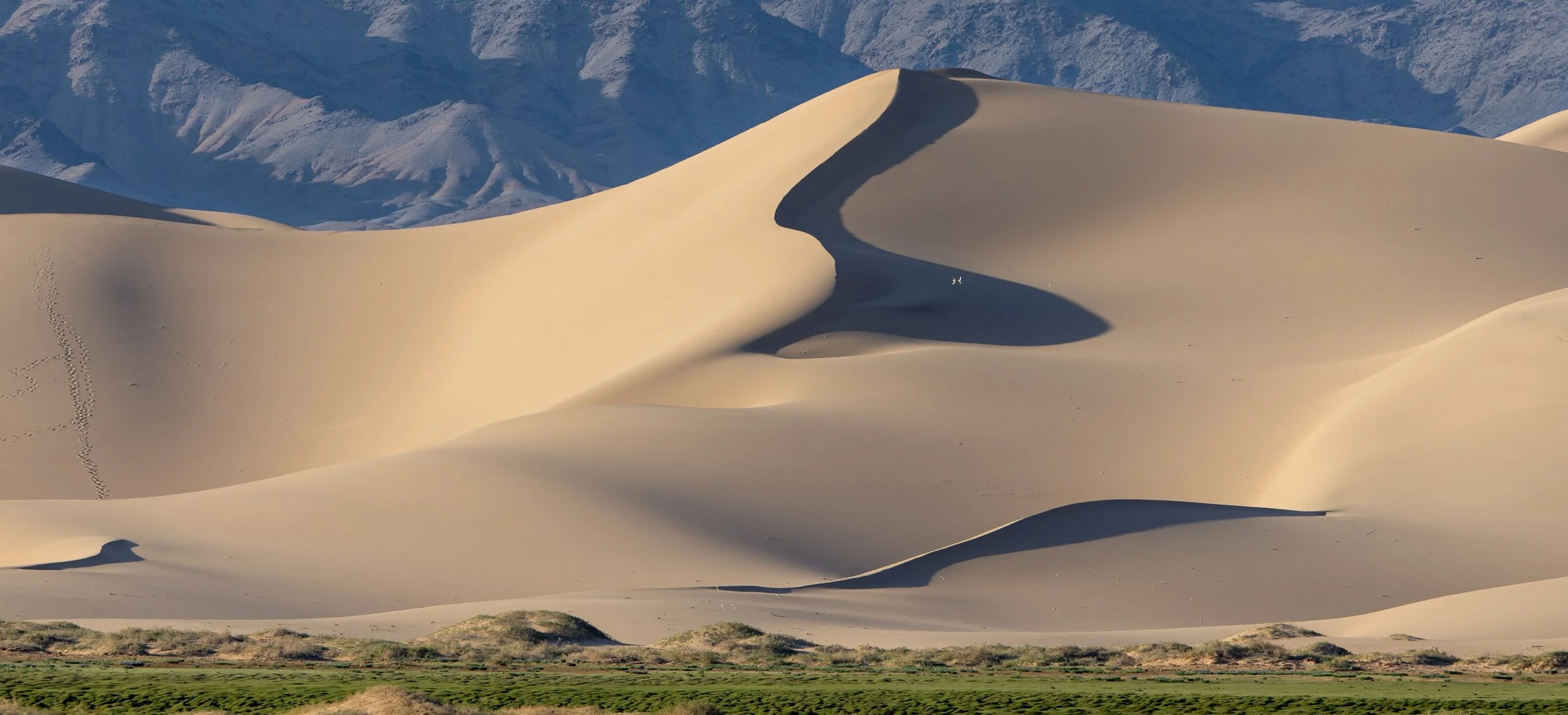
The Khongor Sand Dune in the Gobi Desert by Louis Bevier
If vast open spaces tug at your heart, then Mongolia has done the same. The “Land of the Eternal Blue Sky” is nearly the size of Alaska, yet has a population about that of Los Angeles. This makes it the most sparsely populated country on the planet. About 25% of the population still live the nomadic lifestyle for which the country is famous. It is said there are more horses than people in Mongolia. Half of the people live in the capital, Ulaanbataar, and even here one is near to nature. Just south of town is the world’s first national park (protected in 1783).
For nature lovers and birders, there are few places more spectacular. Endless empty blue skies during the day burst with starlight at night. When spring migration is underway and the breeding season is kicking off, Mongolia offers the best birding in Central Asia. Famed for its awe-inspiring expanses, we visit the Gobi Desert in the south, camp amidst the steppes and grasslands, and explore the forests and mountains of the north. With a few hotels and ger camps mixed in, mostly we hop-scotch from one campground to the next, remaining in wilderness, and are thus well positioned to absorb the serene and stark beauty of the unique landscape, and to see its feathered gems.
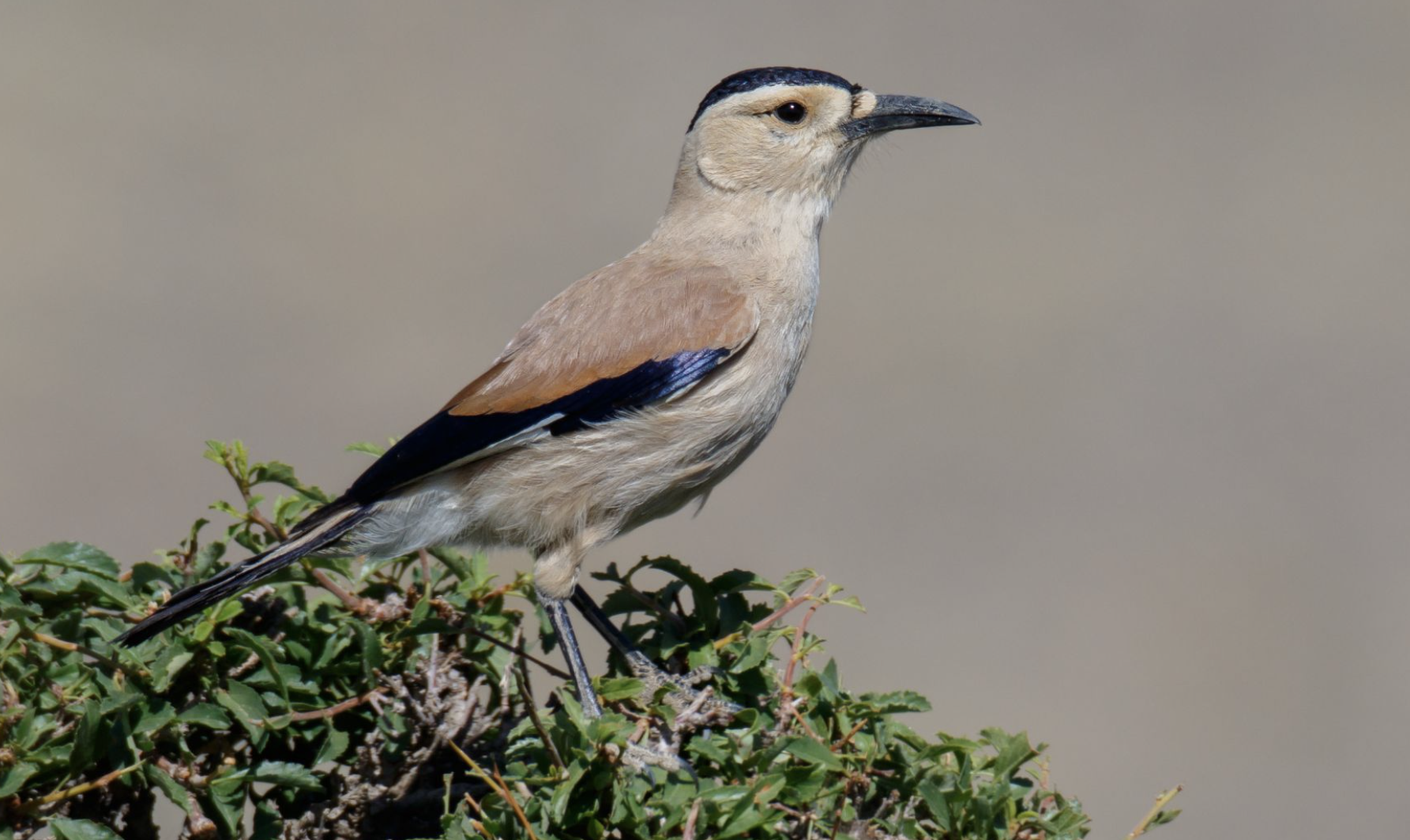
Join us as we seek out the Mongolian Ground-Jay, the Altai Snowcock, the dapper Oriental Plover, White-throated Bushchat, Mongolian Lark and Relict Gull. Along the way we will also try to see Swan Goose, Bearded Vulture, Wallcreeper, Azure Tit, and so much more.
Tour Features
● Boundless horizons, intensely scenic landscapes, and dramatic night skys.
● Prolonged time in wilderness, as we hopscotch from one remote, scenic camp site to the next.
● Sparsely populated landscape with a living tradition of nomadism and equestrian culture.
● A leader in conservation, the nation is on target to protect 30% of its land by 2030.
● Seldom observed Central Asian species and iconic birds, such as Beautiful Rosefinch, White-naped Crane, Stejneger’s Scoter, Lammergeier, Wallcreeper, Altai Accentor & others.
● Fascinating mammals, with good chances to see Przewalski’s Horse (Takhi), Mongolian Gazelle, Asiatic Wild Ass (Onager), Corsac Fox & more.
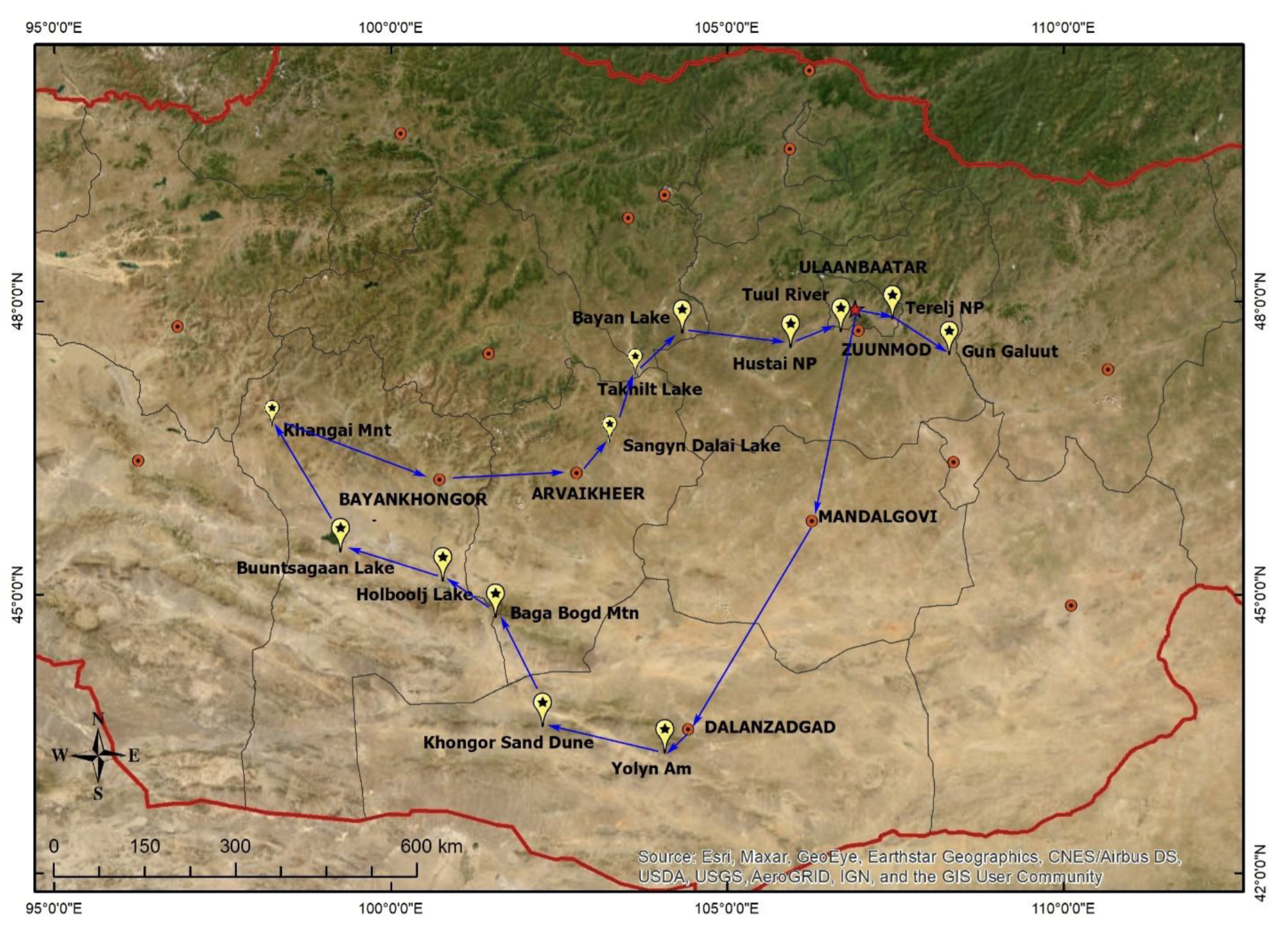
Tour Plan
Day 0. Arrival to Ulaanbaatar
Day 1. UB to Dalanzadgad, birding South Gobi, night in a ger camp.
Day 2. Birding Khongor sand dunes, night in a ger camp.
Day 3. Khongor Sand Dune, night in a ger camp.
Day 4. Drive to Baga Bogd Mountain, night in a tent camp.
Day 5. Birding Baga Bogd Mountain and drive to Holboolj lake, night in a tent camp.
Day 6. Birding Holboolj Lake and drive to Buuntsagaan Lake, night in tent camp.
Day 7. Birding Buuntsagaan Lake and drive to Relict Gull colony, night in tent camp
Day 8. Birding at the Relict Gull colony and drive towards Khangai mountain, night in tent camp en route.
Day 9-10. Khangai Mountain, nights in tent camp.
Day 11. Khangai Mountain to Arvaikheer, night at hotel in Arvaikheer.
Day 12. Takhilt Lake & Bayan Lake, night in tent camp.
Day 13. Hustai National Park, night in ger camp.
Day 14. Birding at Hustai and transfer to Terelj NP, night in tent camp.
Day 15. Birding Terelj NP and transfer to UB, night at hotel.
Day 16. Departures


Hotspots

Gobi Gurvan Saikhan Mountains & Yolyn Am
Among the nation’s newest and its largest national park, the Gurvan Saikhan Mountains are known as “The Three Beauties” for the three scenic if smaller subranges that comprise the Gurvan Saikhan. Well known as a dwelling place for Argali and Siberian Ibex, we shall visit the unique Yolyn Am. Resting within the Zuun Saikhanii Nuruu (the Eastern Beauty) subrange, “Yol” is the Mongolian word for the Bearded Vulture (or Lammergeier), and thus this is “the Valley of the Vultures”. While we hope to bump into this bird somewhere along the way, we also seek Wallcreeper, Godlewski’s Bunting, Mongolian Accentor, Beautiful Rosefinch, Barred Warbler, and Sulphur-bellied Warbler. Yolyn Am is known for its ice field which by the end of winter may be several meter thick and several kilometers long. In route to the park, we will seek the dashing Oriental Plover, and hit a couple migrant hotspots.
The Gobi Desert & Khongor Sand Dune
The Gobi is the 6th largest desert in the world, bigger than Texas and California combined. It is a rather diverse desert, exhibiting a variety of habitats. Resting in the southern reaches of the Gobi, stretching up to 7 miles wide, 62 miles long, and rising up several hundred feet high, is Khongoryn Els, the Khongor Sand Dune, also called Duut Mankhanor the "Singing Sands". Due to wind, the enormous dunes here continually shift and re-shape, releasing small avalanches, and emitting a resonant sound, that sounds sort of like a plane taking off in the distance. On the way to the dune, we will look for rare mammals such as Asiatic Wild Ass (a.k.a. Onager), Goitered Gazelle and Mongolian Gazelle. Nearby we’ll explore hilly areas to look for Mongolian Ground-jay, and we will hit a small patch of Saxaul forest (Saxaul is a shrub/tree in the Amaranth family) to try and see Saxaul Sparrow, while looking too for Asian Desert Warbler, Southern Grey Shrike, Desert Wheatear, and Long-legged Buzzard.

Baga Bogd Mountain
Like so many places we visit, there is a stark beauty to the landscape here. The Baga Bogd is a part of Gobi Altai mountain range, and it is famous as the best place to see magnificent Altai Snowcock. We will spend significant time seeking this special, and should encounter some other birds here too, like Grey-necked Bunting, Mongolian Finch, Wallcreeper, Barred Warbler and Sulphur-bellied Warbler.
Holboolj Lake
One those sites basically only visited by birders, Holboolj Lake is known for being a good spot for gulls, terns, ducks and some waders. One of our best chances for Relict Gull and Asian Dowitcher, we could also find birds like Pallas’s Gull, the three “marsh” terns (White-winged, Black and Whiskered), waterfowl species such as Swan Goose, Bar-headed Goose, Garganey, or Red-crested Pochard. With luck we could encounter the dapper Pallas’s Sandgrouse or some oddball rarity attracted to this watering hole.
Buuntsagaan Lake
Between the Khangai and Gobi-Altai mountain ranges lies a chain of saline lakes. The area is known as the Valley of the Lakes, and together they form a Ramsar site, and thus are wetlands of international importance. Buuntsagaan is the largest lake in the area and birds of special attention here include Relict Gull, Swan Goose, and Pallas’s Fish Eagle, but we could also encounter other waterfowl or waders (shorebirds).
Relict Gull Colony
While we have a fair chance of encountering the now rare Relict Gull along our route, we will be making a special visit to an area that has consistently hosted a large breeding colony of Relict Gull. Their appearance anywhere else in Mongolia is unpredictable but here we can reasonably expect to spend quality time with one of the world’s rarest gulls at one of their last breeding colonies.
Khangai Mountains
Famous as the cradle of Mongolian and nomadic civilization, these mountains also offer some great birding. The Alpine meadow habitats here allow for some beautiful species. Chief among these is the rare Hodgson’s Bushchat. A species in steep decline due to deterioration of grasslands on its wintering grounds in Nepal and northeastern India, here we could see it in its breeding finery. Along with it, we’ll hope to see the finely marked Altai Accentor, as well as the smart White-winged Redstart, and the less smart Blyth’s Pipit.
Bayan Lake & Takhilt Lake
Two remote, beautiful lakes and well known birding spots, known as locations for threatened Dalmatian Pelican, Pallas's Fish-Eagle, and Saker Falcon. Other raptors are possible too such as Cinereous Vulture and Upland Buzzard, and we hope to find reedbed specialists and wetland birds like Pallas’s Reed Bunting, Bearded Tit, Eastern Yellow Wagtail, Oriental Reed Warbler, Paddyfield Warbler, Pallas’s Grasshopper Warbler, Eastern Marsh Harrier and White-naped Crane.

Hustai National Park
Established in 1993 to protect reintroduced Przewalski’s Horse, this park is a wonderful mix of forest, steppe, grasslands, and sand dunes. The horse, known locally as Takhi, is considered to be the only remaining wild horse species in the world. Once widespread across the steppes of western Europe and Asia, since the mid 1900s it has been confined just to Mongolia’s Gobi region. The park also supports other mammals such as elk, Tarbagan Marmots and out on the steppes of the park, Mongolian Gazelles. We’ll keep an eye out for raptors and could see Golden Eagle, Steppe Eagle, Saker Falcon, Amur Falcon, and other birds like Daurian Partridge, Meadow Bunting and the handsome Mongolian Lark.
Gachuurt Forest & UB Outskirts
The forests outside of Ulaanbaatar can have Hazel Grouse, Siberian Jay, Eurasian Three-toed Woodpecker, Eurasian Goshawk by the end of our trip some new spring arrivals may have pitched in, like Chinese Bush Warbler. We’ll also keep an eye out here for Siberian Rubythroat, Black-faced Bunting, Dusky Warbler and even possibly Gray-headed Tit. Nearby the Tuul River can sometimes offer encounters with Azure Tit, White-crowned Penduline Tit, Amur Falcon, Long-tailed Rosefinch, Azure-winged Magpie and White-cheeked Starling.
Rigor & Pace
Most accommodations are in yurts (also called “gers”) or pitched tents (tented camps). Mongolia is sparsely populated with few options for places to stay away from the capital, UB. The camps are comfortable and well located for scenery, birds and wildlife, but not luxurious. We mix in a few hotels too, particularly in UB, and with one also mid-tour. Camping spaces are limited such that single tents are also limited. If you wish for a single room in the hotels, that can be arranged but for single space while camping, please inquire with us and we can see if a single tent or ger is possible
Transportation during the tour is mostly via Toyota Land Cruisers (4WD), and we do have some long drives required to cover ground. Luckily we can see birds almost anywhere as we go. But there are a couple days of prolonged driving (4+ hours).
Weather is quite variable in May/June, though normally is warm or even hot during the day. At night it cools down and often remains so early in the morning. On the days when we are higher up, it can be chilly. Rain and even snow are possible.
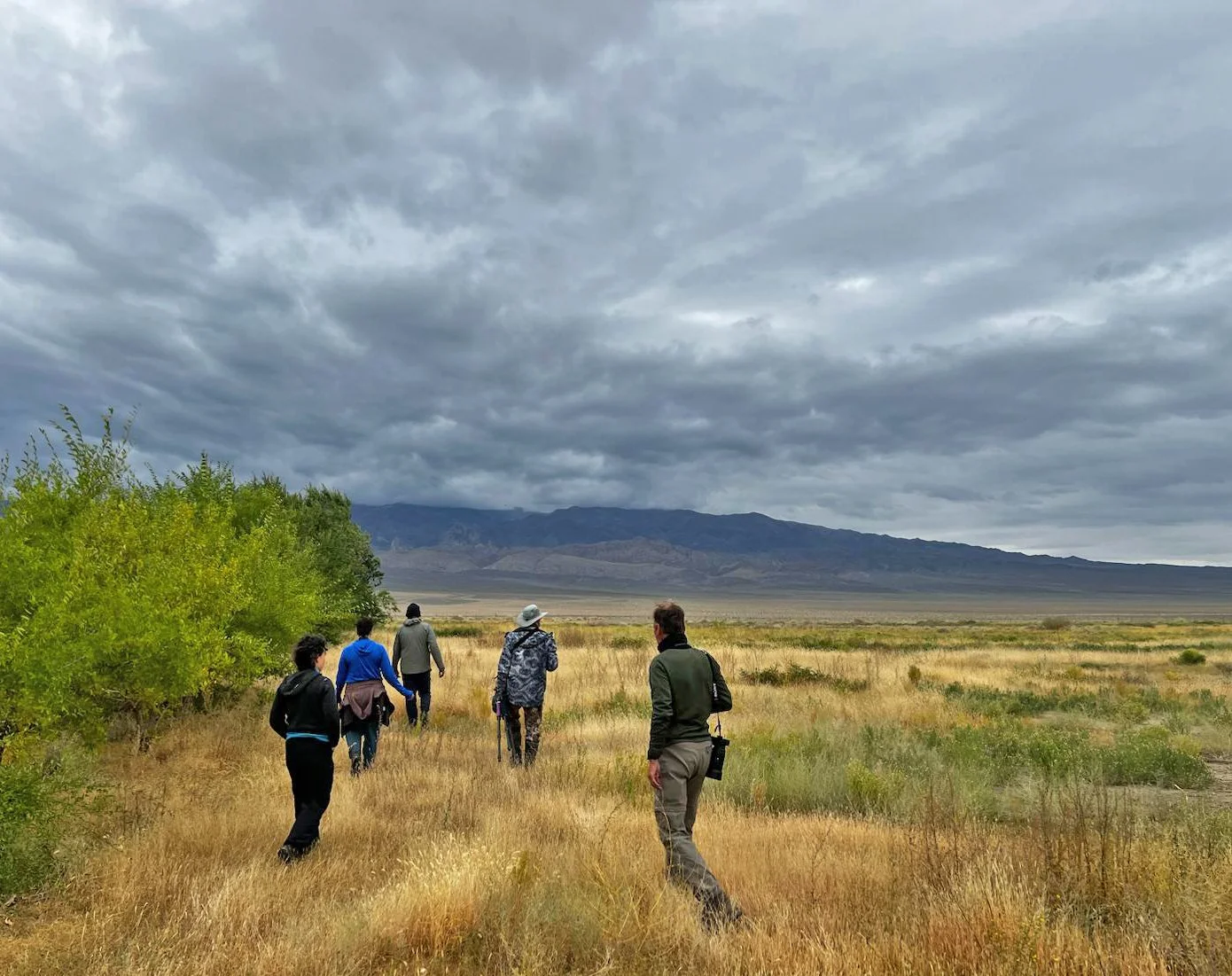
There is little strenuous activity during this trip. Mostly we are on flat terrain and when on foot are going at a reasonable (birder’s) pace, but there may be days when we spend several 3-5 hours on foot. There may be a couple of options for more strenuous hikes in places where there is time for it, but this would be optional.
PRICE & BOOKING INFO
Pricing can not be finalized at this time due to the uncertainty of fuel costs in Mongolia. We have altered our cancellation terms to allow for a full refund for 2 weeks from the time final pricing is announced (see below).
Advance registration with a fully refundable deposit as follows:
Sign up now: Pay your deposit today.
Get email updates: Hillstar Nature emails you when the price is finalized and posted.
Two-week window: You will have 14 days to cancel for a full refund or keep your booking.
Cancellation Policy after 14 day period:
120 days or more prior to departure: Loss of $1000 deposit
Between 119 and 90 days prior to departure: 50% of total tour price refund
89 days or less prior to departure: No refund issued
Estimated Tour Price/person*: $9500
Deposit: $1000/person
Estimated Single supplement: $580 limited availability (inquire if you desire a single room/tent, see “Rigor & Pace”)
Final Payment Due: January 24, 2028
Group size: 8 to 12 guests
Hillstar Nature strongly recommends all guests purchase travel insurance that covers Trip Cancellation, Trip Curtailment, Trip Interruption, and Emergency Medical and Medical Evacuation.
*Based on double occupancy at lodgings, with a group size of 8 to 12 registrants. Maximum group size is 12 registrants, plus guide(s) and driver(s). If there are fewer than 8 registrants, this tour may be cancelled or re-negotiated. Note that if you want a roommate we can try to find you one, but we cannot guarantee all guests a roommate. If none is available, you will be charged the single supplement.
The tour price (fee) includes:
All accommodations from Day 1 until Day 16.
All meals from dinner on Day 1 through breakfast on Day 16.
All transportation from airport pick-up on Day 1 to airport drop-off on Day 16.
All guiding services,access permits and entrance fees to birding areas included.
Tips for drivers and staff at hotels and restaurants.
Excluded from your tour fee are:
International arrival and departure flights.
Alcoholic beverages
Personal expenses such as laundry services, charges for phone calls, additional expenses associated with travel such as insurance, visa fees, airport taxes, airline baggage fees, COVID tests, vaccinations, etc.
Tips for local guide/escort (recommended $5 to $10/day/person).
Documents
All travelers must have a current passport, valid for six months beyond the start date of this tour, with at least one blank page for visas.

Sunset at Boon Tsagaan Lake by Louis Bevier