
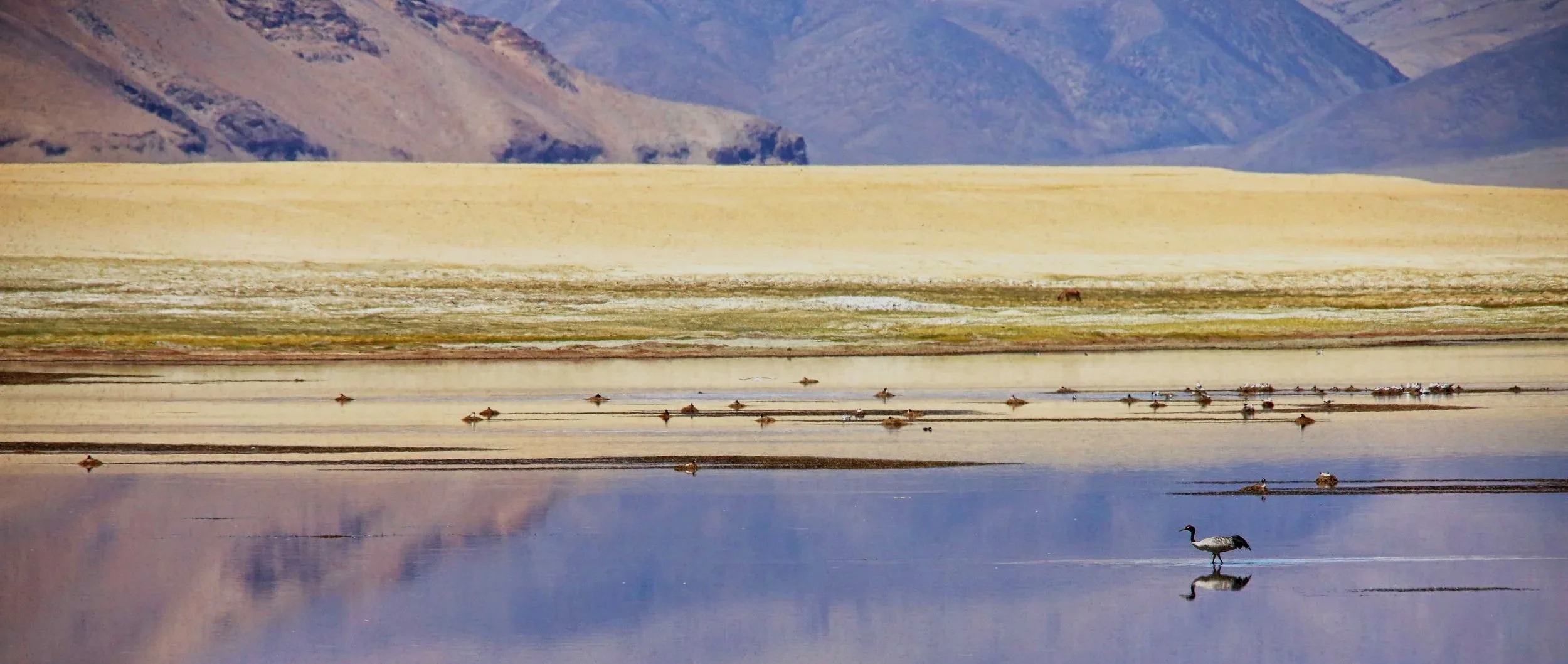
India: A High Himalayan Quest
Ladakh & the Vale of Kashmir: Iconic Animals & Rare Birds
August 27 — September 9, 2028
With George Armistead & Surya Ramachandran
Images ©Surya Ramachandran, unless noted otherwise
The scenery is tough to beat. Tracing an arc from Srinagar beyond the city of Leh, we tour the Transhimalaya, visiting lofty little villages and stationing ourselves at select spots to seek electrifying animals and birds. A region perhaps most famous for its spirituality, from the Kashmir Valley, we pass below the Zanskar Range up into the Ladakh Range, then flank the edges of a couple national parks. As we go we expect animals such as Pallas’s Cat, Kiang (Tibetan Wild Ass), the critically endangered Himalayan Brown Bear, Siberian Ibex, and Himalayan Wolf. Other iconic mammals are possible too, and yes indeed, we make time to seek the legendary Snow Leopard, as well as the odd, blocky-headed Tibetan Fox. Of course one always needs a little luck, but we give ourselves good chances. And, the birding is tremendous, with strange and special species including Tibetan Snowcock, Bearded Vulture, Black-necked Crane, Kashmir Nutcracker, Ground Tit, Orange Bullfinch, and possibly Ibisbill, or even the enigmatic Long-billed Bush Warbler, among many others.
It’s the most humbling landscape on Earth and it hosts some of the planet's most legendary animals and seldom-seen birds. Join us for a unique high Himalayan adventure.
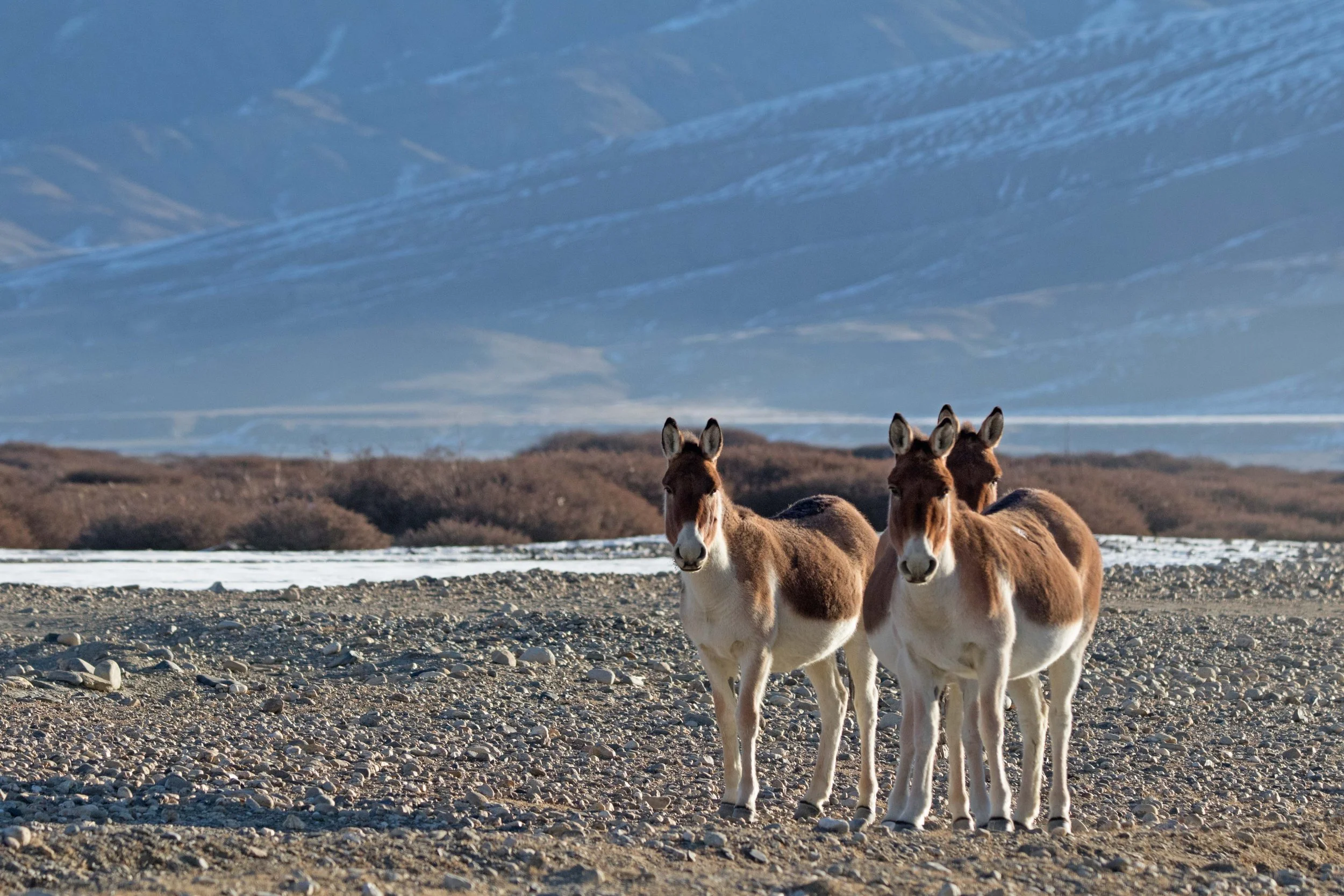
Kiang herd
Tour Features
Dramatic Himalayan scenery at center stage, lunar landscapes, high peaks and passes, lush verdant valleys, tranquil lakes, & rocky rivers.
Focus on both Birds & Mammals, with special interest in Pallas’s Cat, Tibetan Fox, two bear species, Ibex, Snow Leopard, Chamba Sacred Langur & others.
Special birds: Tibetan Snowcock, Black-necked Crane, Kashmir Nutcracker, Ground Tit, White-cheeked Nuthatch, Kashmir Nuthatch, Orange Bullfinch, Solitary Snipe, accentors, & finches. Some autumn migrants moving too.
The terrain presents an undeniable spiritual ambience, and we visit a number of monasteries & temples.
Cuisine: Meals are satisfying accents, with Tibetan soups, Momos (dumplings), Kashmiri barbecue, saffron rice dishes, Butter Tea, and other local teas.
High Elevation, ranging from 5000 feet to ~16,000 feet above sea level. Snow Leopard Lodge is the highest hotel at 13,400 feet. Transport is in 4x4s, Toyota Land Cruisers or similar.
Tour Plan (13 nights/14 days)
Day 1: Arrival into Srinagar, Orientation & Welcome Dinner, night at Srinagar.
Day 2: Exploring the Kashmir Valley, night at Srinagar.
Day 3: Exploring the Kashmir Valley, night at Srinagar.
Day 4: Drive (4-hr) to & night at the town of Dras.
Day 5: Birding the Suru Valley, night at Kargil.
Day 6: Drive (4-hr) to Ulley, night at Snow Leopard Lodge
Day 7: Exploring around & night at Snow Leopard Lodge.
Day 8: Birding to & night at Leh.
Day 9: Exploring from & night at Leh.
Day 10: Drive (5-hr) to & night at Hanle.
Day 11: Exploring the Hanle River Valley, night at Hanle.
Day 12: Exploring the Hanle River Valley, night at Hanle.
Day 13: Bird our way back to & night at Leh.
Day 14: Flights out from Leh.
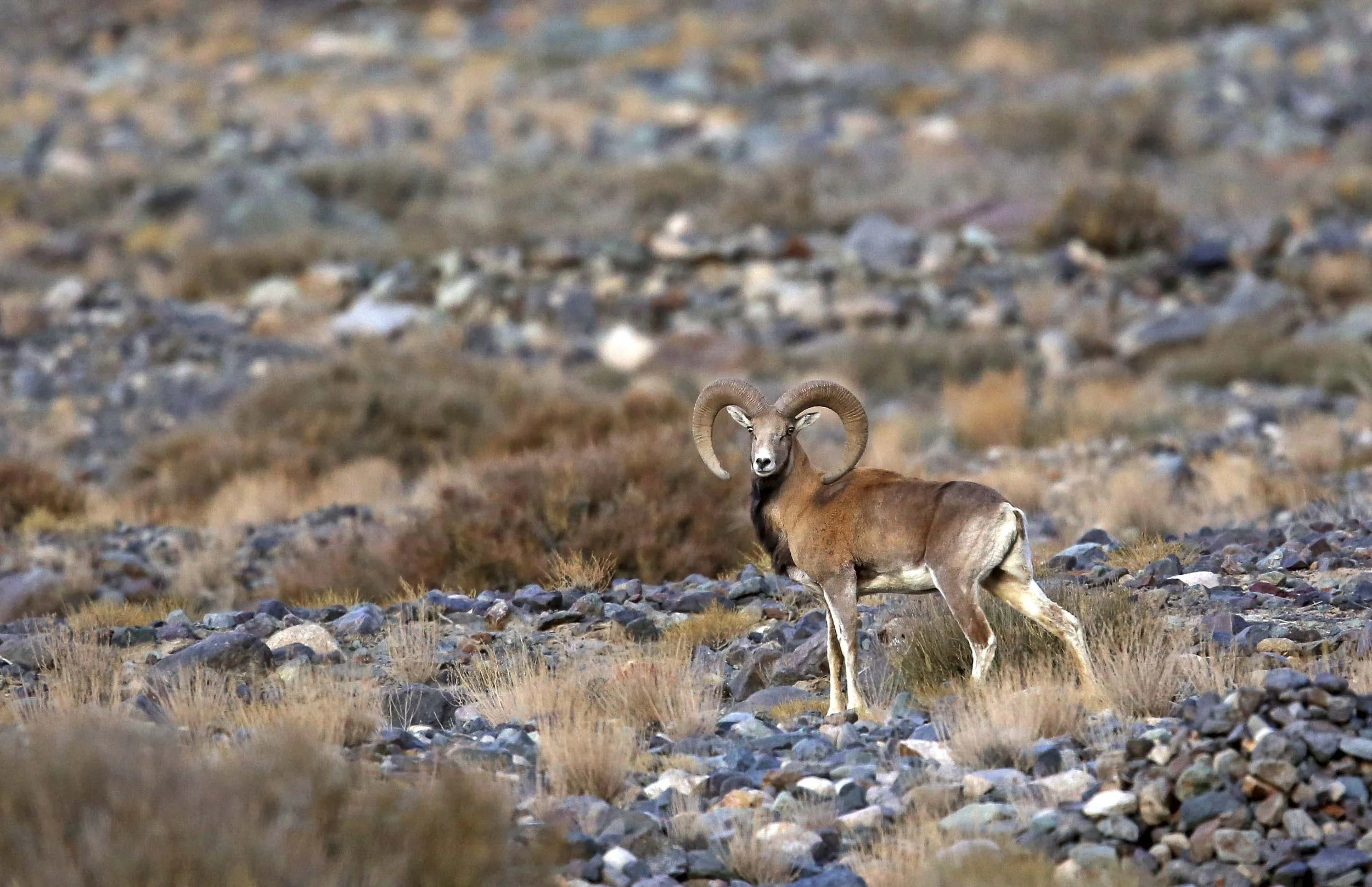
Ladakhi Urial
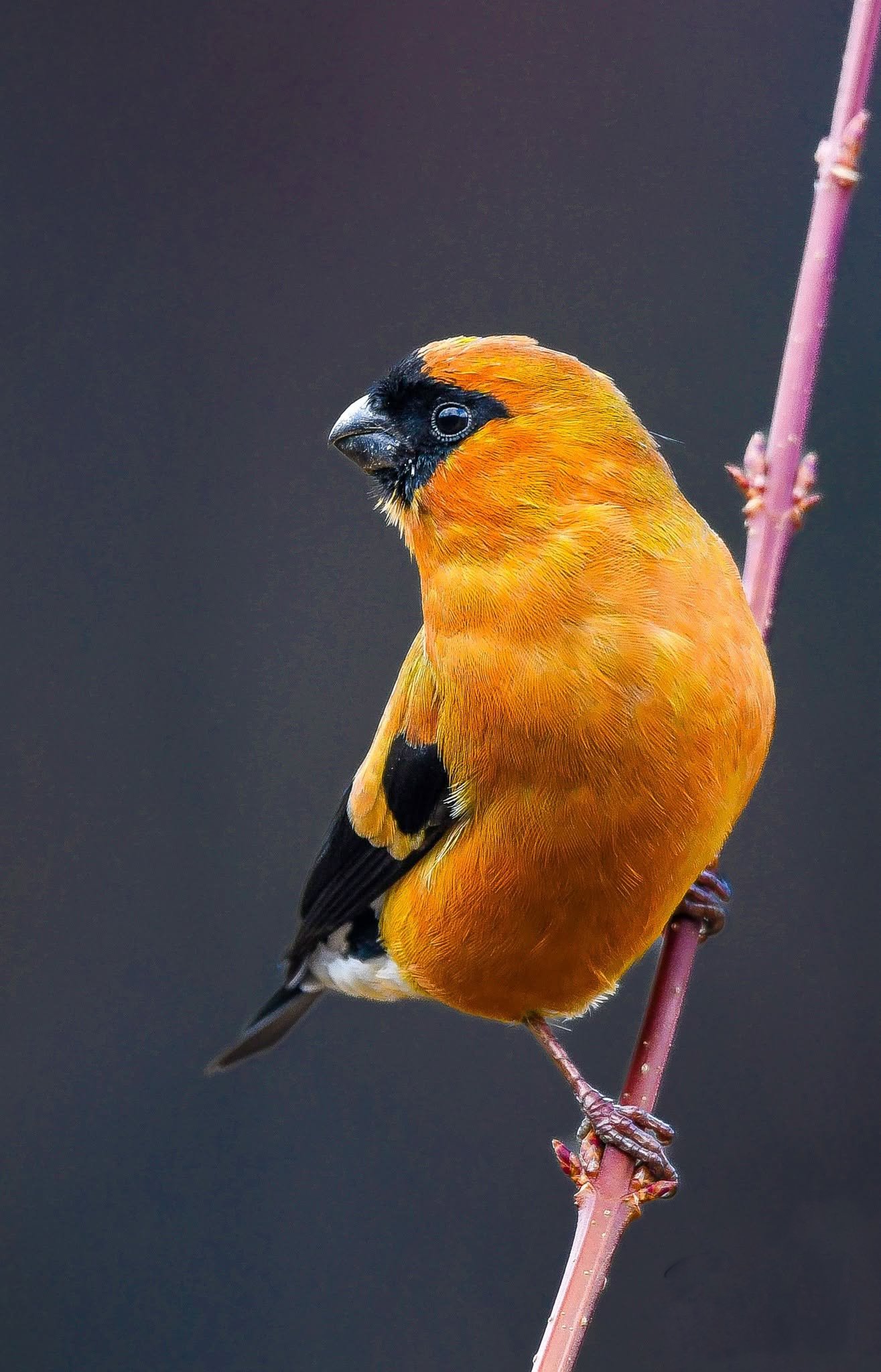
Orange Bullfinch
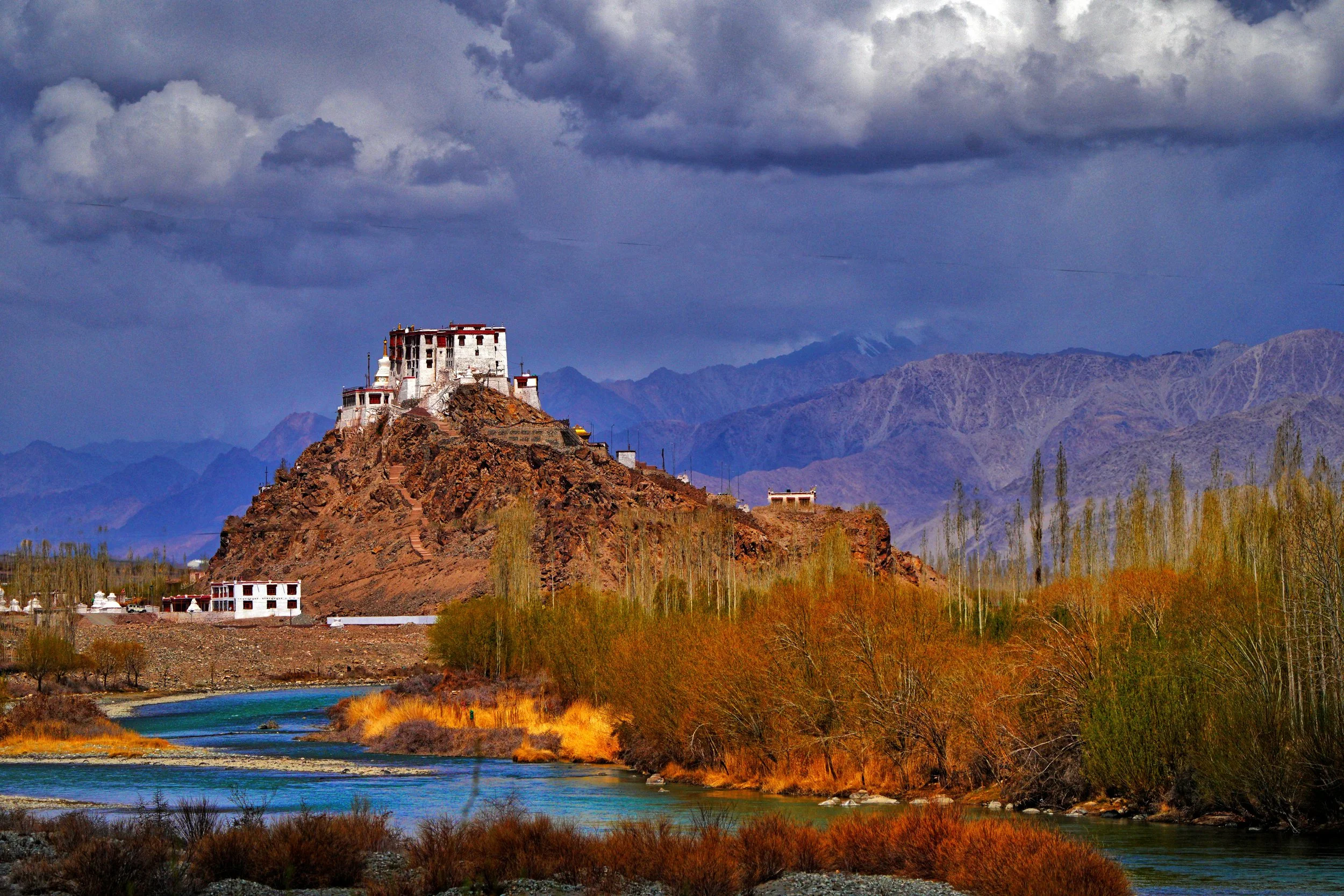
Stahkna Gompa Monastery
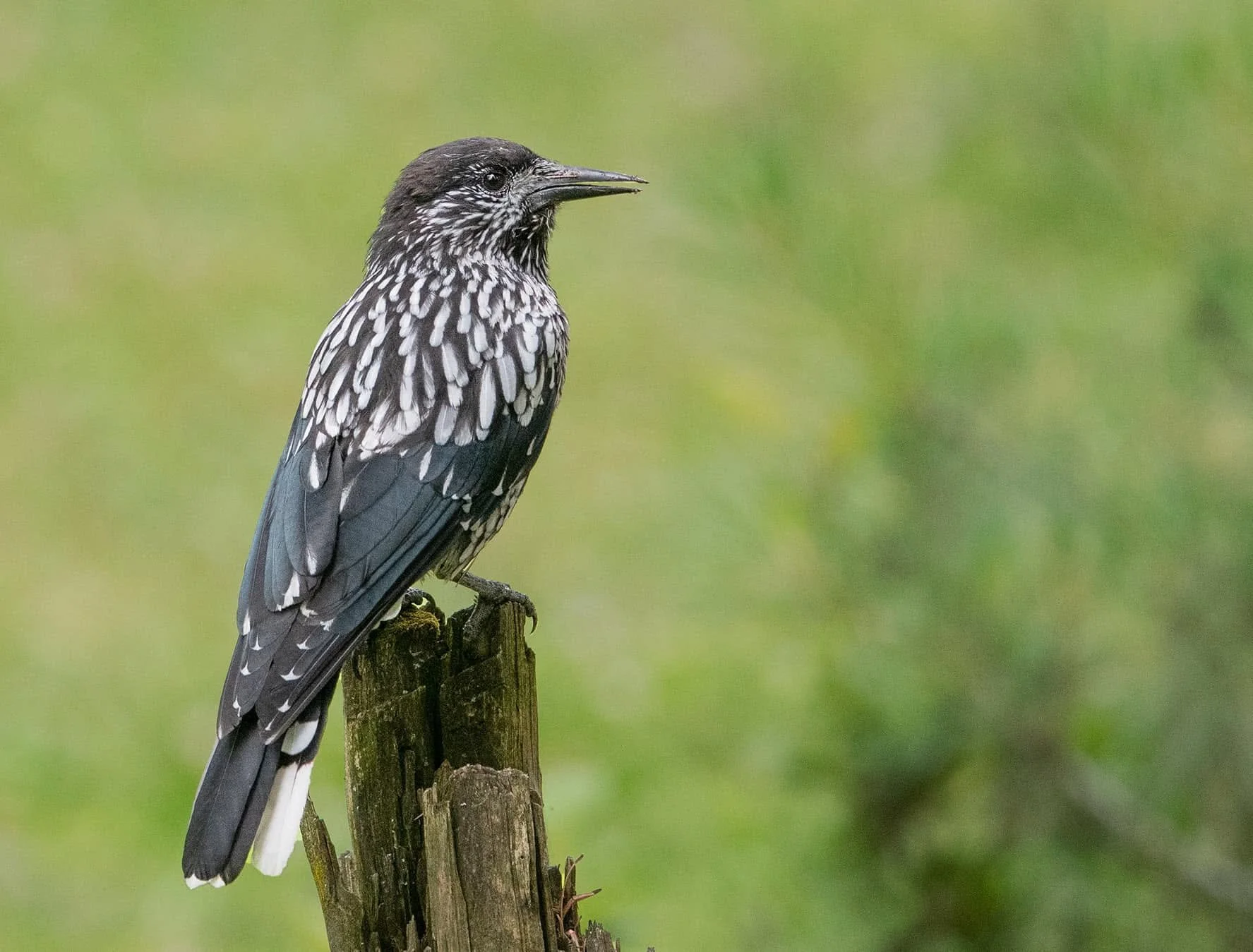
Kashmir Nutcracker
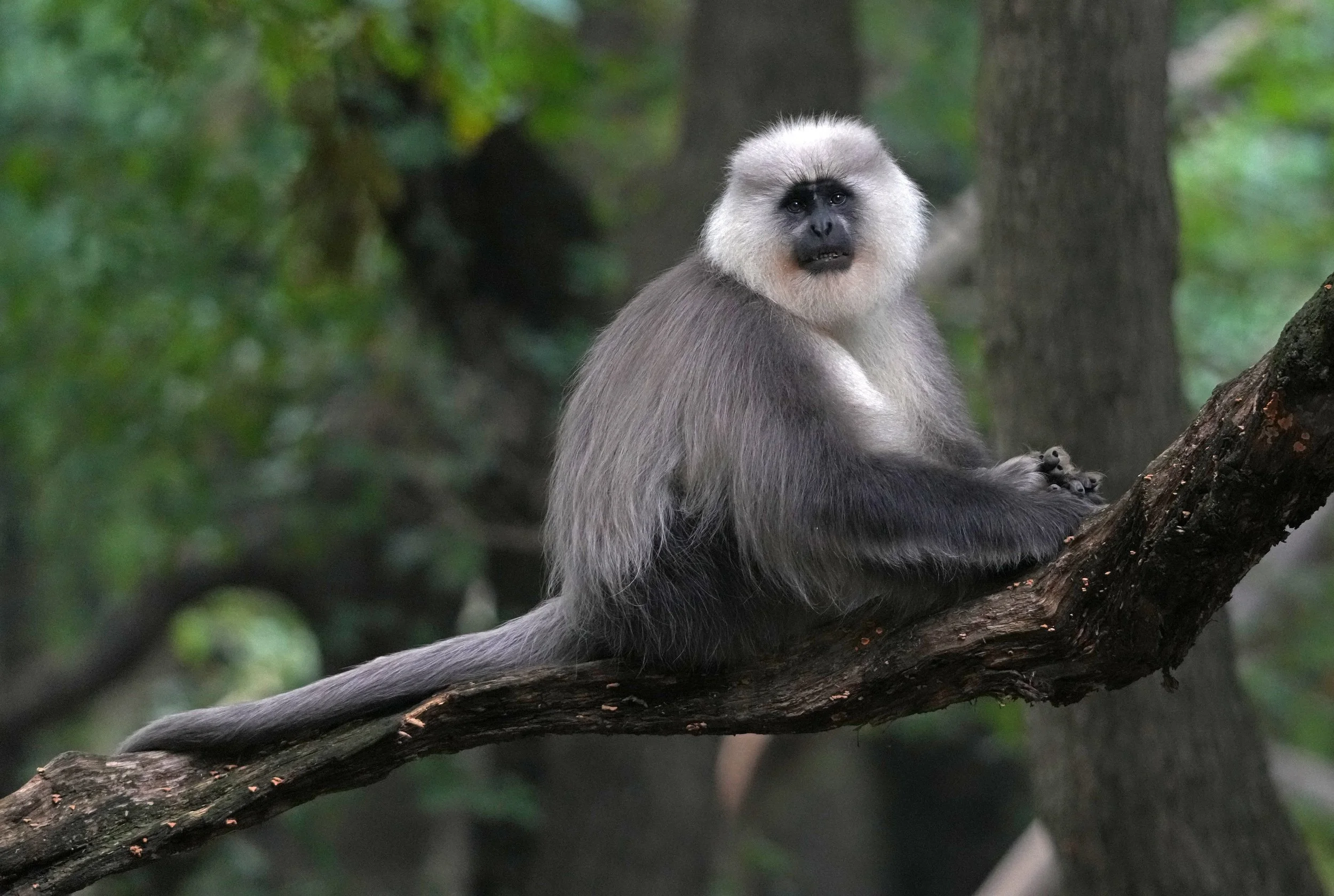
Chamba Sacred Langur
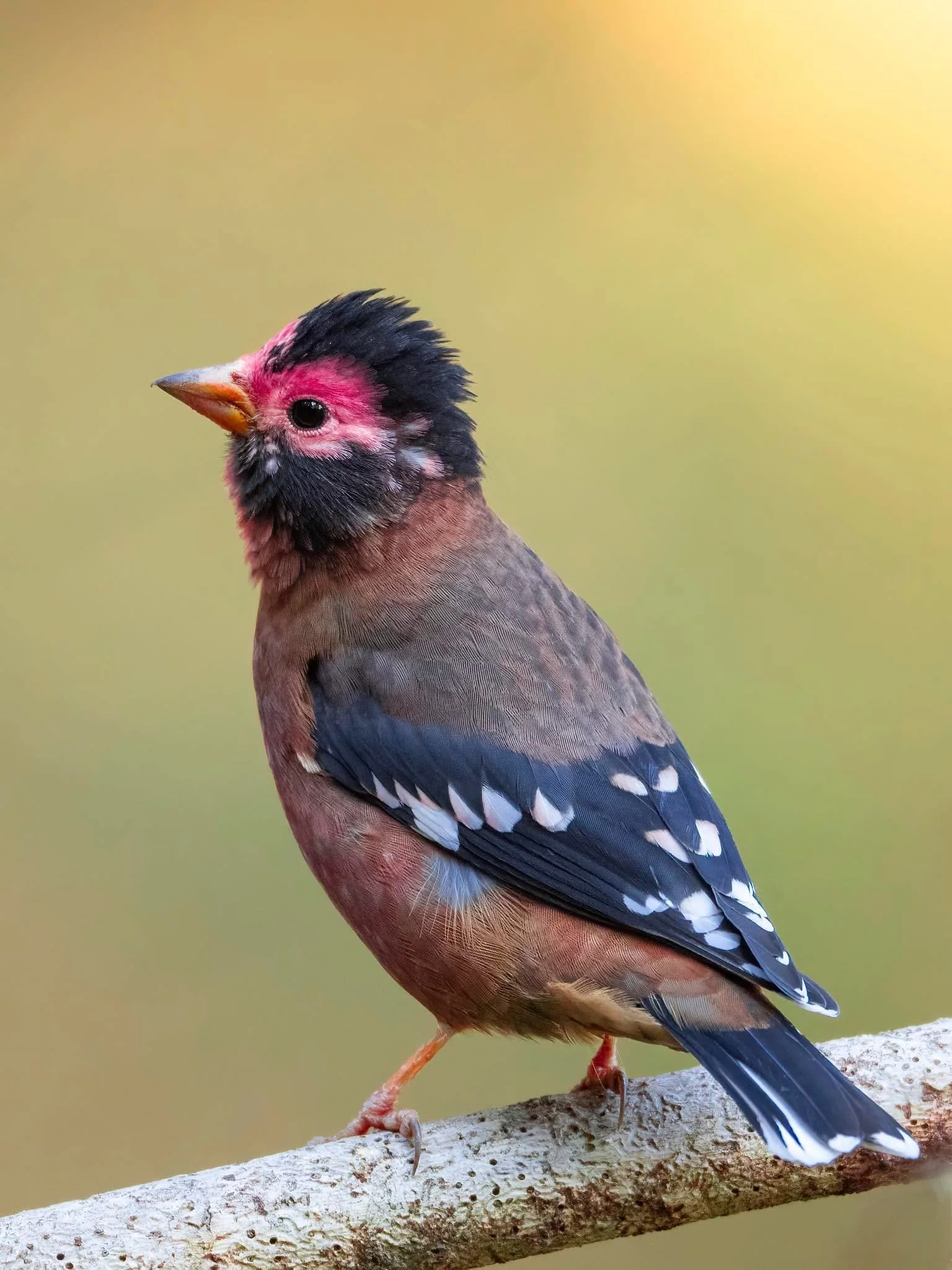
Spectacled Finch
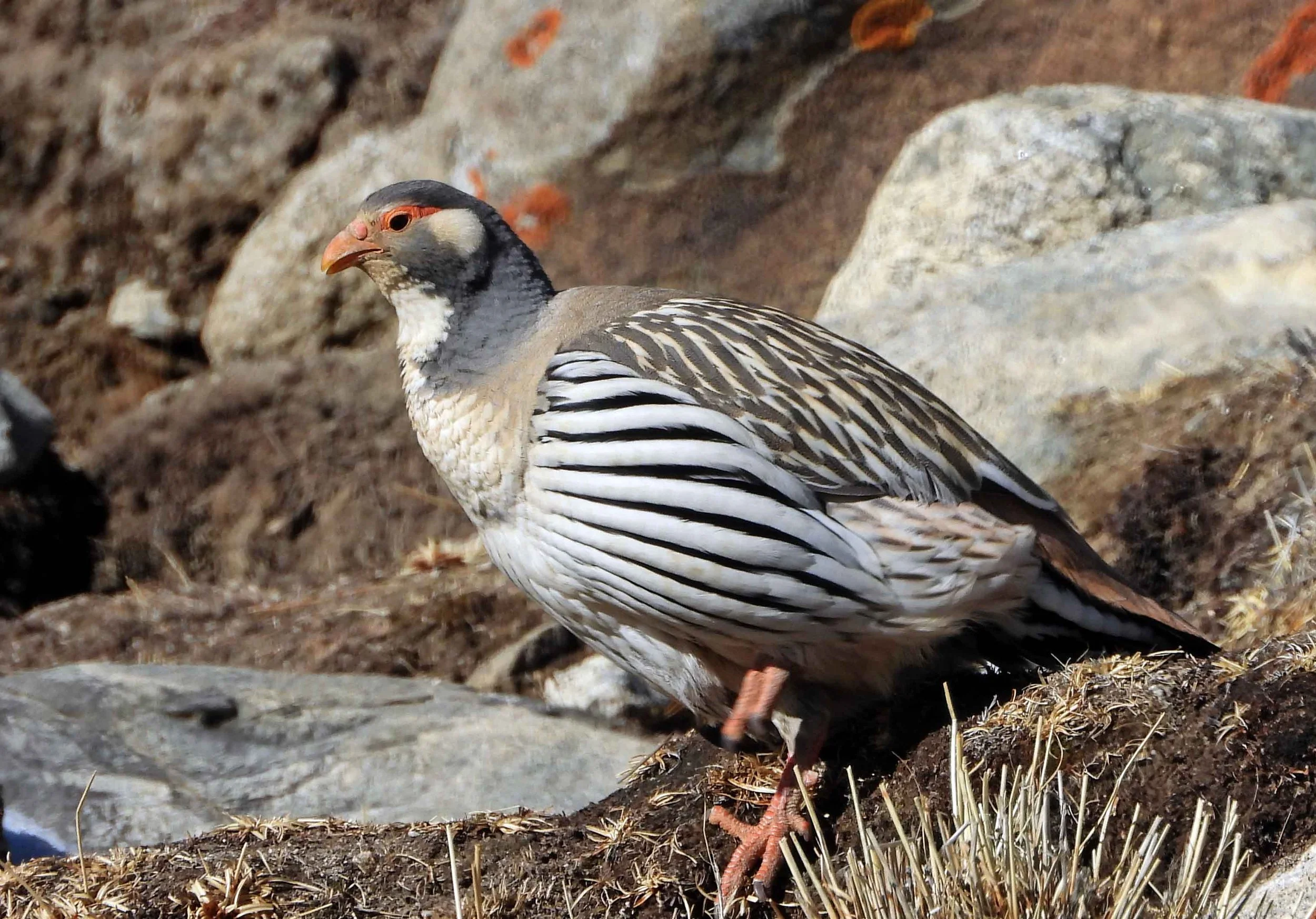
Tibetan Snowcock
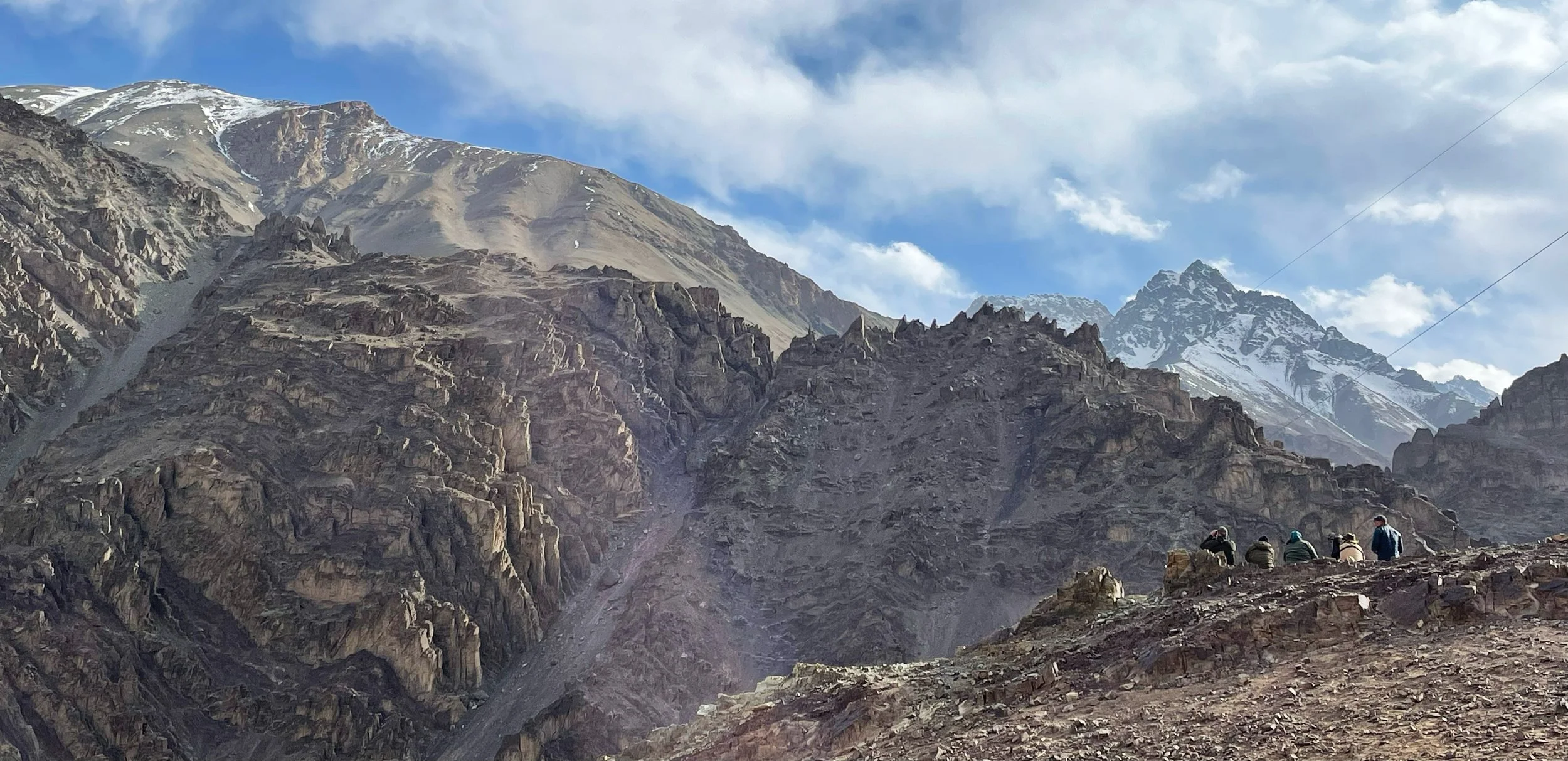
Searching for Snow Leopards (by George Armistead)
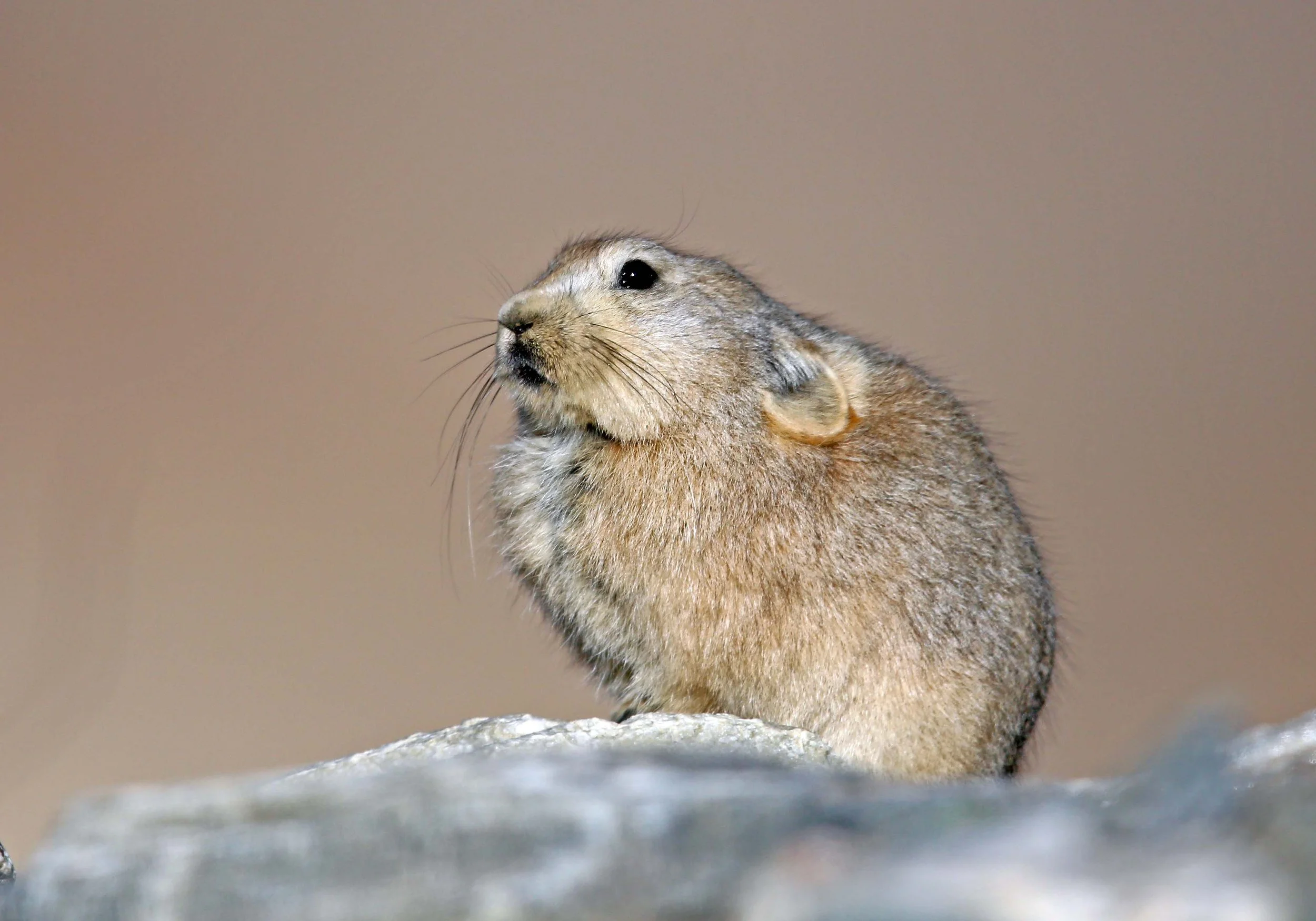
Ladak Pika
Tour Destinations
Srinagar (5200 feet above sea level)
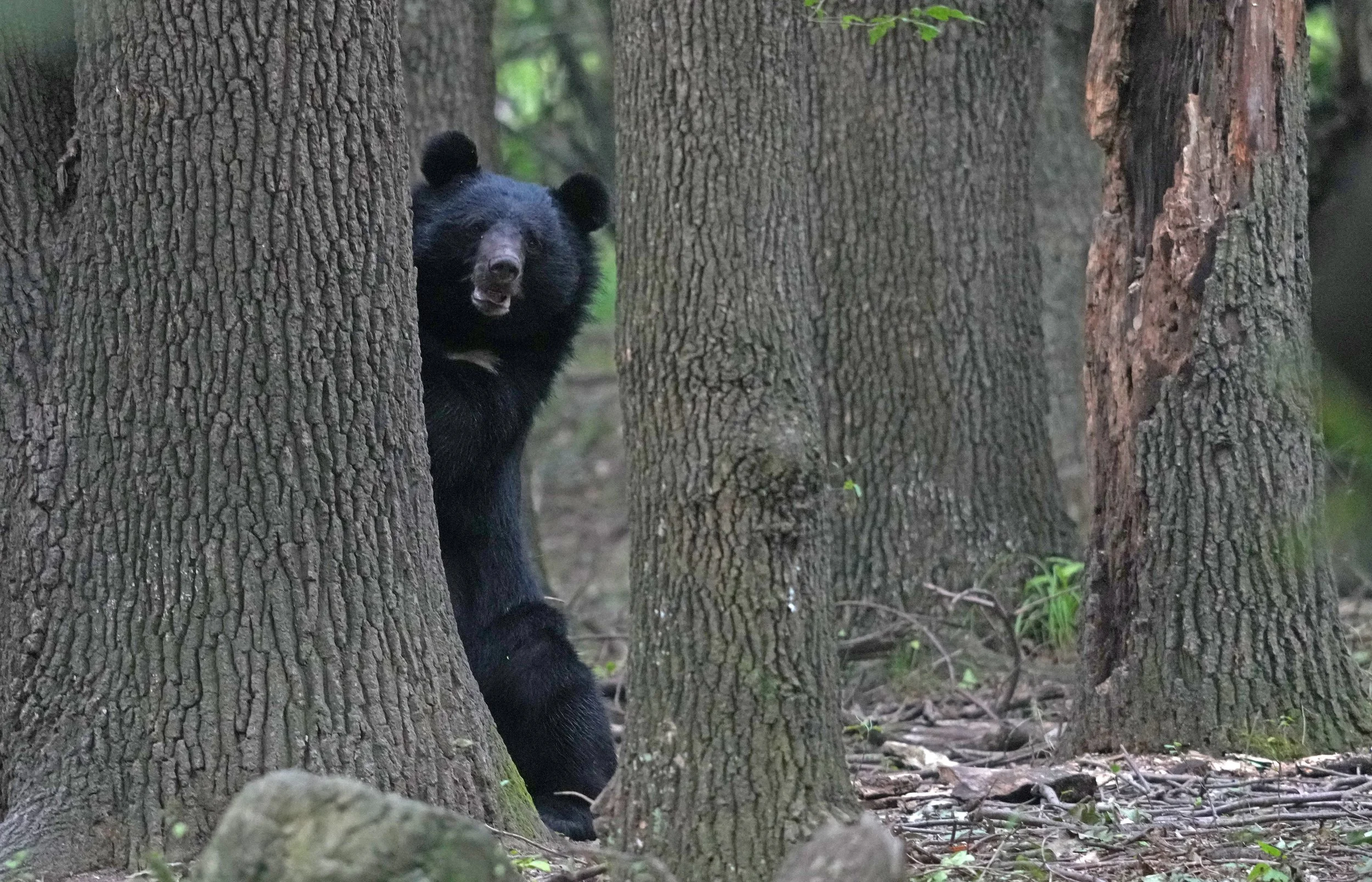
Asiatic Black Bear
Founded in the 6th century, Srinagar is the second-largest city in the Himalayas after Kathmandu, and is well known for its traditional Kashmiri handicrafts, including peshmina and cashmere wool shawls, and other items too. Set in the Kashmir Valley, wedged between Dal Lake and Anchar Lake, one sees a landscape featuring orchards, gardens, hill forest, and wetlands. The combination makes for some great birding, and while based here for three nights we’ll visit spots like Shankaracharya Forest, several lakes, and the Hokersar Wetland. As we move through the various sites in the area, we hope to connect with birds like Scaly-bellied Woodpecker, Brown-fronted Woodpecker, Yellow-billed Blue-Magpie, Kashmir Nutcracker, Streaked & Variegated Laughingthrushes, Orange Bullfinch, Tytler’s Leaf-Warbler, Lemon-rumped Warbler, White-cheeked Nuthatch, Kashmir Nuthatch, Kashmir Flycatcher, Tibetan Blackbird, and up to 5 species of redstarts. Exploring around Dachigam National park we have a chance at Asiatic Black Bear, a largely arboreal species, and also for the Hangul, or Kashmir Stag, a critically endangered subspecies of Tarim Red Deer. With only just over 300 total individuals, this is the state animal and the big males may have antler racks with up to 16 points
Leh & the Indus Valley (11,500 - 17428 feet)
The atmospheric city of Leh is the cultural hub of Ladakh, and served as an important hub on the Himalayan branch of the Silk Road. Known for its scenic beauty, an ethereal ambience, and its access to wilderness areas, it is a fascinating place to explore and a good jumping off point for birding. Nearby are brilliant blue and green lakes, and otherworldly lunar landscapes. We’ll see the Lachen Palkar Palace and Shanti Stupa, a gorgeous Buddhist peace pagoda, and take time to see Leh's ancient Silk Route markets embedded in the heart of town. Outside of town, we plan to visit sites like Spituk Marshes, Wari La Pass (17,428 feet asl), and Thiksey Monastery. As we go we’ll keep our eyes skyward for raptors like Himalayan Buzzard, Himalayan Griffon, Bearded Vulture (a.k.a. Lammergeier), and Golden Eagle. Bubbling mountain creeks could hold Solitary Snipe or Ibisbill, and surrounding hillsides and cliffs are good for Hill Pigeon, Sulphur-bellied Warbler, Rock Bunting, and Mongolian Finch. Up high at Wari La we will keep an eye out for Eurasian Lynx, Black-headed Mountain Finch, and Mountain Weasel.
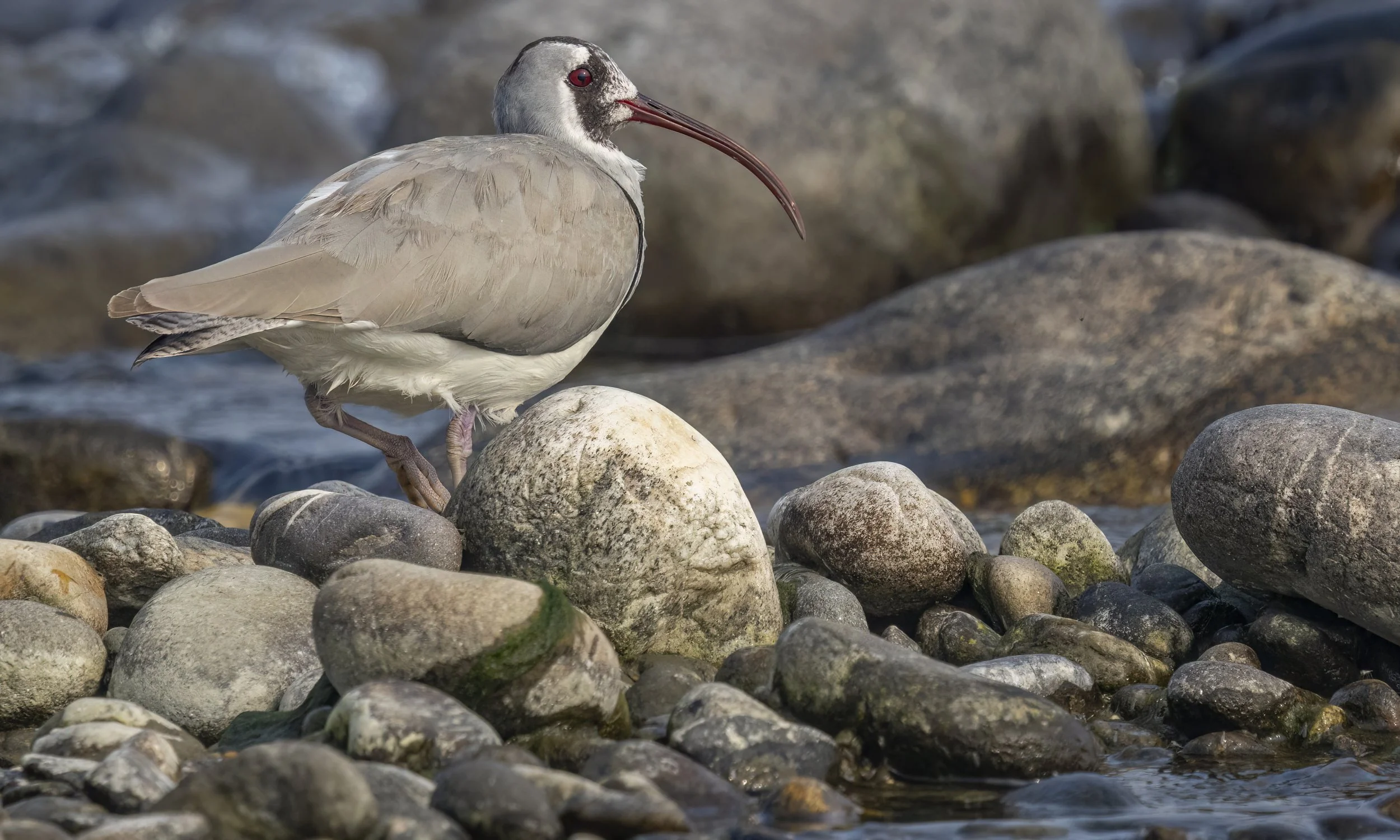
Ibisbill by George Armistead
Ulley & The Snow Leopard Lodge (13,123 feet)
Ulley lies high in the Sham region, north of the Indus, firmly within Ibex and Snow Leopard country. The Snow Leopard Lodge, born from a simple homestay created by a local tracker with guidance from conservationist Rinchen Wangchuk, has become both a comfortable base and a hub for community-led conservation. Wildlife tracking is a part of daily life here, and every visit directly supports local livelihoods and the protection of Ladakh's iconic cats and mountain habitat. This will be our best chance to find the Grey Ghost, or the “Shan” as it is known locally, the Snow Leopard. We will need luck to connect with a sighting, but we will do what we can to stack the deck in our favor. Typically sightings of this most enigmatic big cat are of distant animals, often employing the use of a spotting scope. We’ll have local trackers and spotters working with us who know the animals well, and while our chances are quite good, of course, nothing is guaranteed. Luckily there is much else to see here, at this season. Often there are Tibetan Wolves around, and several sheep/goat species including Ibex, Bharal (Blue Sheep), and Urial, and for birds there are Red-billed and Yellow-billed Choughs, and Accentors that may include Alpine, Robin, and Brown, both White-throated and Brown Dipper, Tibetan Partridge, and Himalayan Snowcock.
Hanle & Vast Valleys (15,000 feet)
The town of Hanle lies south and east of Leh (~160 miles), and is on the Hanle River, which forks off of the Indus. Hanle is a remote village of scientific and ecological importance, home to India's highest observatory and the country's first Dark Sky Reserve, and it is a hotspot for wildlife. The area is part of the Changthang Conservation Region, a high-altitude cold desert plateau, with the great lakes of Tso Moriri and Pangong Tso. These provide excellent birding. Working the areas surrounding the lakes we will hope for birds such as Tibetan Saandgrouse, Black-necked Crane, Tibetan Snowcock, Tibetan Partridge, Saker Falcon, White-winged Redstart, Hume's Lark, Tibetan Lark Mongolian Finch, and the bizarre Ground Tit. The latter is a species that confounded scientists for years, and prior to genetic work it was called a ground jay or a groundpecker, but research has shown it is indeed in the chickadee family, with perhaps the Great Tit being its closest relative. This is also a good area for the Pallas’ Cat, a.k.a. the Manul. We work with locals who study and track these animals and so we will hope that chance favors us.
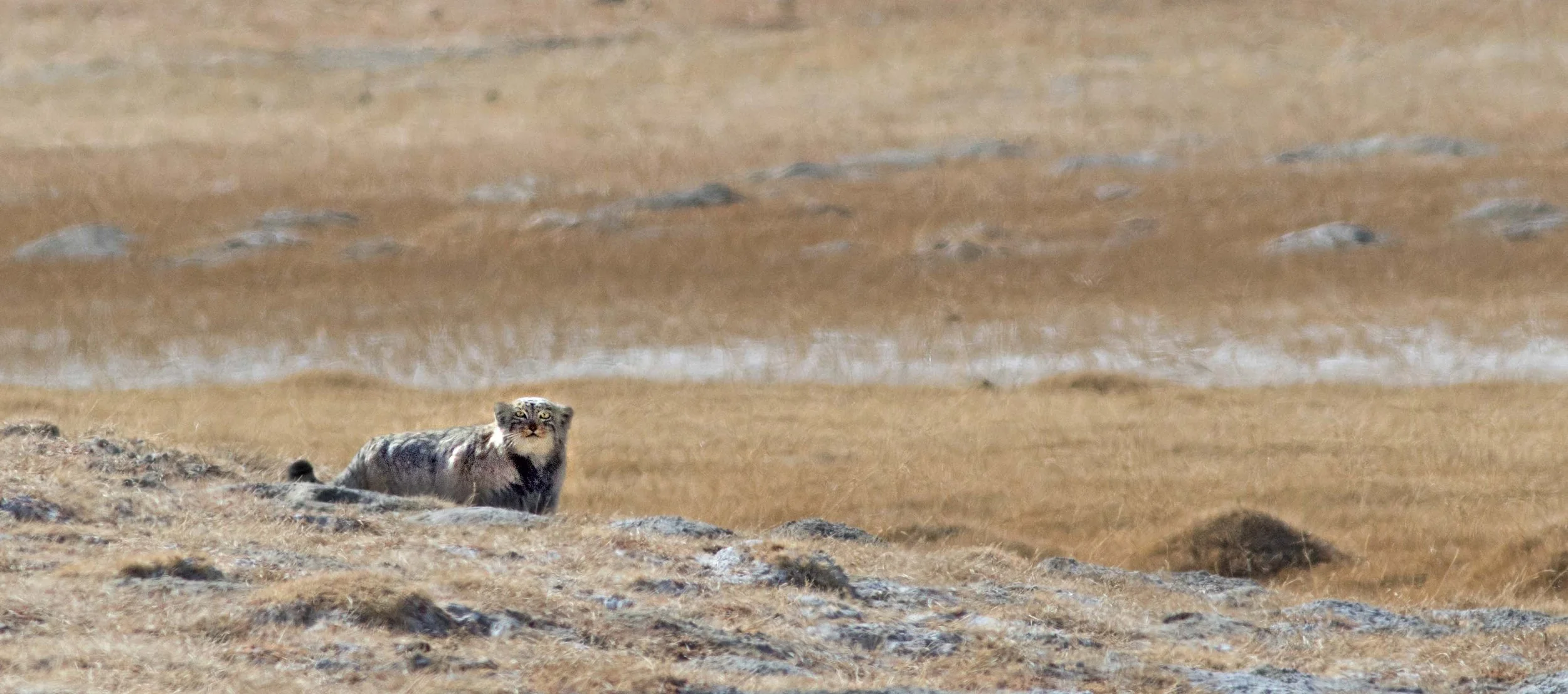
Pallas's Cat
Dras & Kargil (10,000 feel, 8800 feet)
Dras is known as the Gateway to Ladakh. Kargil is the second-largest urban centre in Ladakh after Leh. With a stop in each we give ourselves time to explore the Suru Valley, a scenic area with alpine scrublands and stands of riverine willow. Dras is set amid dramatic high altitude terrain along the Dras River and is known for its stark beauty, cold climate, and opportunities for Himalayan Brown Bear tracking, among other wildlife. We’ll put in some time seeking Brown Bears, and the birding is great too. While the area is known among birders for the enigmatic and seldom-seen Long-billed Bush Warbler, we would need incredible luck to encounter that. Yet there is much else to see and we’ll set our sites on finding birds such as Gray-crowned Goldfinch, Himalayan Rubythroat, Fire-capped Tit, and Little Forktail, Mountain Chiffchaff, and White-browed Tit Warbler
Mammals
Our best guess at the odds for target species
Estimated 15-40% chance of seeing:
* Snow Leopard
* Eurasian Lynx
* Tibetan Sand Fox
* Tibetan Argali
* Ermine or Stoat
* Stone Marten
* Desert Hare
* Leopard Cat
* Common Leopard
* Hangul or the Kashmir Red Deer
* Musk Deer
Estimated 60%+ chance of seeing:
* Asiatic Black Bear
* Himalayan Brown Bear
* Himalayan Wolf
* Himalayan Red Fox
* Pallas's Cat
* Mountain Weasel
* Various Pikas and Voles
* Long-tailed Marmot
* Himalayan Marmot
* Woolly Hare
* Asiatic Ibex
* Ladakh Urial
* Bharal or Blue Sheep
* Kiang/Tibetan Wild Ass
* Tibetan Gazelle
* Chamba Sacred Langur
PRICE & BOOKING INFO
Tour Price/person*: $7765
Deposit: $1000
Single supplement: $1470, limited availability
Final Payment Due: April 29, 2028, or at registration if after.
Group size: 6 to 12 guests
*Based on double occupancy at lodgings, with a group size of 6 to 12 registrants. Maximum group size is 12 registrants, plus guide(s) and driver(s). If there are fewer than 6 registrants, this tour may be cancelled or re-negotiated. Note that if you want a roommate we can try to find you one, but we cannot guarantee all guests a roommate. If none is available, you will be charged the single supplement.
Hillstar Nature strongly recommends all guests purchase travel insurance that covers Trip Cancellation, Trip Curtailment, Trip Interruption, and Emergency Medical and Medical Evacuation.
The tour price (fee) includes:
All accommodations from Day 1 until Day 13.
All meals from dinner on Day 1 through breakfast on Day 13.
All transportation from airport pick-up on Day 1 to airport drop-off on Day 13.
All guiding services,access permits and entrance fees to birding areas included.
Tips for drivers and staff at hotels and restaurants.
Excluded from your tour fee are:
International arrival & departure flights.
Alcoholic beverages
Personal expenses such as laundry services, charges for phone calls, additional expenses associated with travel such as insurance, visa fees, airport taxes, airline baggage fees, COVID tests, vaccinations, etc.
Tips for local guide/escort (recommended $5 to $10/day/person).
Documents
All travelers must have a current passport, valid for six months beyond the start date of this tour, with at least one blank page for visas.
CANCELLATION POLICY
Please review Hillstar Nature’s Terms and Conditions of Booking at the bottom of the Home page on our website. If a guest/participant cancels registration:
● 120 days or more prior to the start of the tour, a refund is issued minus a $500/person processing fee.
● Between 119 and 90 days prior to the start of the tour, half of the tour fee will be returned to the registrant.
● 89 days or less prior to departure, no refund of payments or deposits are issued.
View Hillstar Nature’s Terms & Conditions of Booking
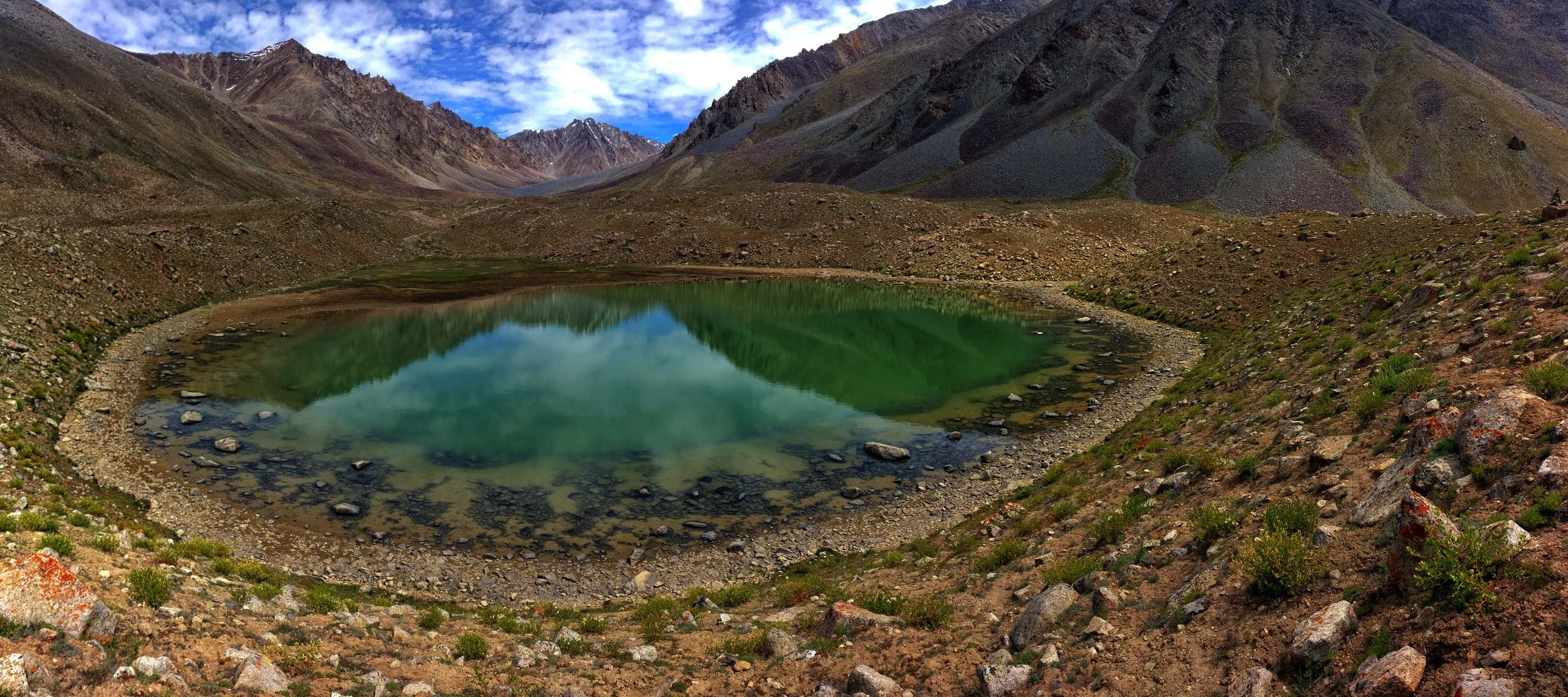
Tso Ralpa, a lake above Ulley in Ladakh